Clustox Blog
Insights on AI, Software & Digital Products
Strategic insights, architectural guidance and expert technical analysis to help you plan, build and scale software that matters.

AI & Data Innovation
AI Engineering Pods
Dedicated expert teams that design, build, and ship production-ready AI systems fast.
AI Discovery & Strategy
Build your AI roadmap with prioritized use cases and clear ROI.
AI PoC & MVP Development
Rapid AI prototyping and MVP development that proves value before full-scale build.
MLOps & Model Deployment
Deploy, monitor, and scale models with automated, production-grade pipelines.
Data Engineering & Integration
Modern data engineering that turns scattered data into clean, AI-ready pipelines.
AI Agents & Agentic Workflows
Autonomous AI agents and agentic workflows that execute real business operations.
Intelligent Automation
Eliminate the manual, repetitive, high-cost work slowing your teams down.
Machine Learning Solutions
Custom models trained on your data and built for measurable outcomes.
Predictive Analytics & Data Science
Turn raw data into forecasts that sharpen every business decision.
AI Governance & Monitoring
Keep AI systems secure, compliant, and accountable as they scale.
Product Engineering
AI Software Development
Custom software with built-in LLMs and intelligent features.
Product Development
Plan, design, build, launch, and continuously improve digital products across their complete lifecycle.
Application Development
Build scalable custom applications with modern architectures and seamless API integrations.
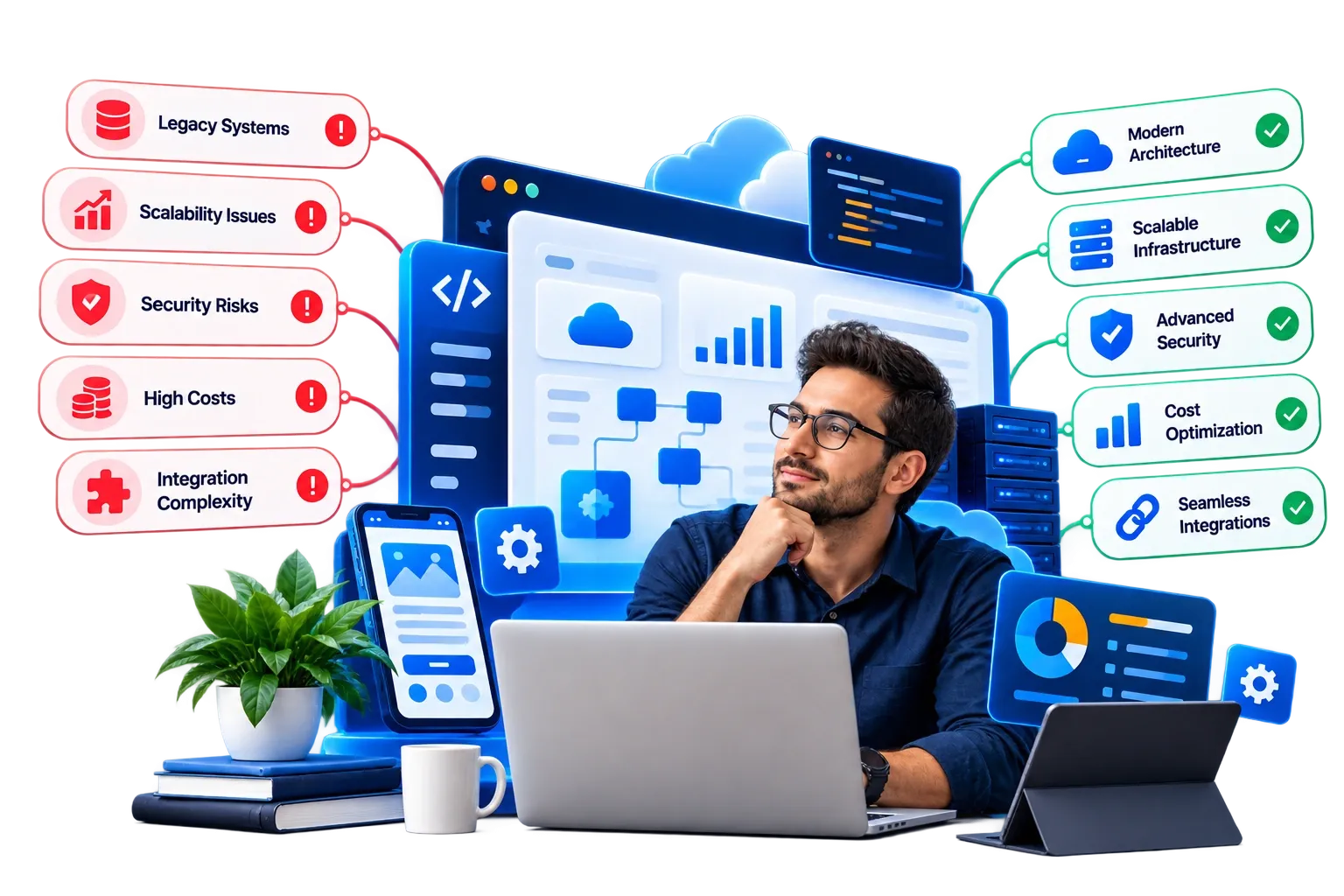
Legacy Application Modernization
Modernize legacy systems into secure, cloud-native architectures.
Embedded Software Development
Reliable embedded software engineered for secure, high-performance devices.
UX/UI Design
User-centric interfaces engineered to maximize engagement and conversions.
Quality Engineering & Test Automation
Automated QA, software testing, and CI/CD for reliable releases.
PoC Development
Rapid proof-of-concept development to validate and de-risk ideas.
Advisory & Strategy
Discovery Workshops
Align stakeholders, validate direction, and de-risk your build before development starts.
AI Product Strategy
Data-backed roadmaps that turn business goals into a clear execution plan.
Digital Transformation Consulting
Modernize legacy systems and workflows into an AI-ready operating model.
Architecture & Feasibility Assessment
Expert assessment of architecture, scalability, and risk before you invest.
UX Research & Design Workshops
Research-driven UX that turns complex products into intuitive experiences.
AI & Emerging Tech Strategy
A clear, low-risk roadmap to adopt AI and next-gen technology.
Cybersecurity
Security Consulting & Risk Assessment
Identify security gaps and risks through expert-led assessments.
Application Security & Penetration Testing
Strengthen apps and APIs through penetration testing and code review.
Cloud Security
Protect cloud infrastructure with hardened configurations, monitoring, and continuous security.
Governance, Risk & Compliance (GRC)
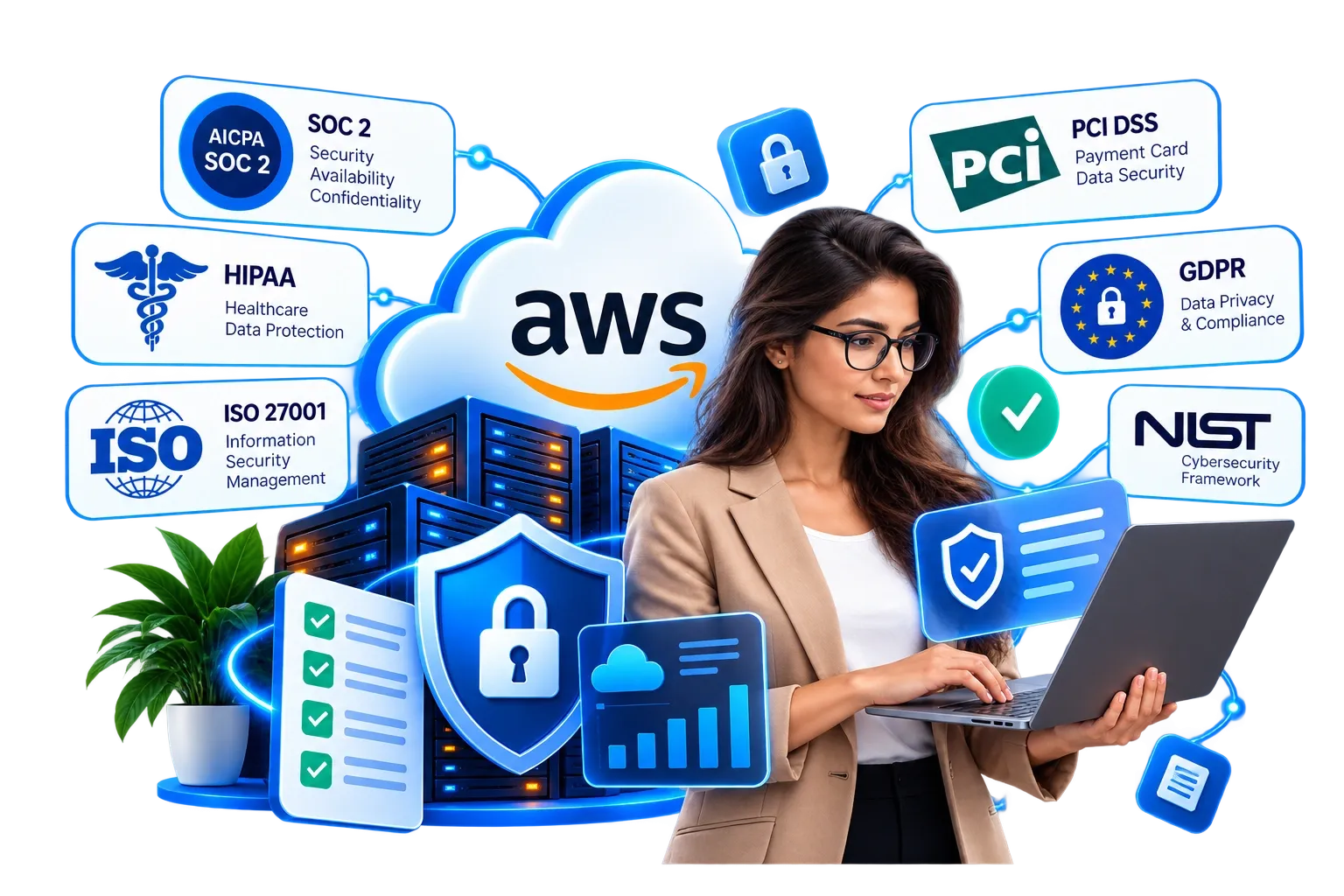
Achieve rapid compliance across SOC 2, ISO 27001, and GDPR.
Data Security & Encryption
Protect sensitive data with end-to-end encryption and strict access control.
Threat Detection & Response
Detect, contain, and neutralize threats in real time across your SOC.
DevSecOps
Embed automated security into every stage of your CI/CD pipeline.
Optimization & Quality
Technical Audit
A deep review of your codebase, architecture, and accumulated technical debt.
Workflow Optimization
Leaner, better-automated engineering workflows that speed up delivery.
UX Audit
Data-backed review of usability gaps, user flows, and conversion blockers.
Performance Optimization
Optimize page speed, scalability, and Core Web Vitals at production scale.
Maintenance & Support
Ongoing, proactive support that keeps your software running 24/7.
Cloud & Infrastructure
AWS Cloud Services
Plan, migrate, modernize, and optimize your cloud environment with Clustox’s AWS expertise.
Cloud Strategy & Architecture
Resilient cloud architecture designed for scale and disaster recovery.
Infrastructure Modernization
Replace legacy infrastructure with secure, automated environments.
CloudOps
Keep cloud environments reliable, secure, observable, and cost-efficient as your business scales.
DevOps
Ship software faster with automated CI/CD pipelines, reliable releases, and efficient engineering workflows
Cloud Cost Optimization
Cut cloud spend with FinOps rightsizing and smarter resource use.
Cloud Migration
Move workloads to AWS, Azure, or GCP with zero disruption.
Cloud Engineering
Secure, automated, cloud-native systems built from the ground up.
Managed Cloud Services
Fully managed cloud operations with 24/7 monitoring and support.
Multi-Cloud Security & Compliance
Unified security and compliance across every cloud environment.
HealthTech & MedTech
Supply Chain & Logistics
Warehouse Management
IoT-powered WMS with automated picking and inventory.
Last Mile Delivery
Route optimization, live ETA, and delivery tracking.
Freight Tech
Digital platforms for truck, air, and sea freight.
Demand Forecasting & Inventory Optimization
AI-driven planning to reduce overstock and stockouts.
Supply Chain Visibility & Control Tower
Real-time tracking and disruption alerts across networks.
FinTech & Blockchain
FinTech
Custom digital banking, payments, and compliance platforms.
Banking
Mobile banking, core ERP, and compliance systems.
Insurance
Claims automation, fraud detection, and InsurTech CRM.
Blockchain
DeFi, DEX, crypto wallets, and Web3 security.
Embedded Finance & BaaS
Embed payments, banking, and lending into apps.
WealthTech & Robo-Advisory
Automated investing and portfolio management platforms.
Other Industries
Marketplaces
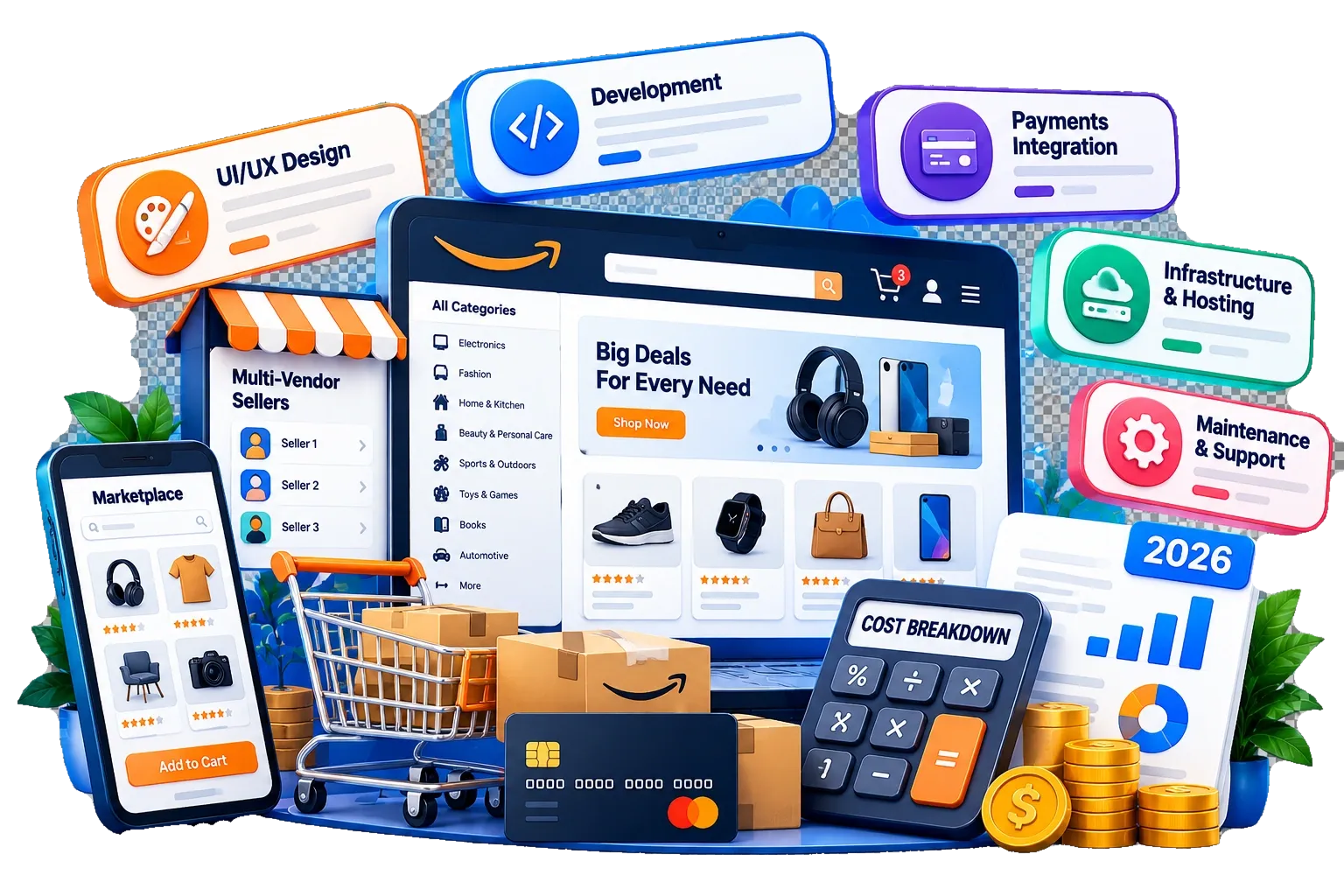
Scalable B2B, C2C, and multi-vendor platforms built to drive transaction volume.
Media Streaming
High-availability VoD, OTT, and live-streaming solutions backed by AWS and Wowza.
Retail
Next-gen POS, RMS, and omni-channel retail systems engineered for modern commerce.
Social Networks
Secure, highly engaging community platforms, messaging systems, and social networking apps.
Travel
Custom booking engines, central reservation systems, and integrated HMS platforms.
Education
Interactive LMS, smart school management software (SMS), and virtual learning ecosystems.
PropTech
Smart property platforms, real estate marketplaces, and digital tools for modern property management.
Strategic insights, architectural guidance and expert technical analysis to help you plan, build and scale software that matters.
Find answers to common questions about custom software development, artificial intelligence, development costs, project timelines, and building digital products
An AI agent is software that uses a large language model to plan and carry out multi-step tasks, such as looking up data, calling other systems, and taking actions toward a goal. A traditional chatbot mostly answers questions within a single conversation, while an agent can work across tools and workflows with limited human input. Most business agents still include human review for sensitive actions. Learn more about AI Agents & Agentic Workflows.
MLOps is the set of practices for deploying, monitoring, and updating machine learning models in production, similar to how DevOps works for regular software. It covers versioning data and models, automating retraining, and tracking performance over time. Without it, models often degrade quietly as real-world data changes. Read more about MLOps.
Modernization usually starts with an assessment of the existing code, data, and integrations, followed by moving the system step by step to a modern, often cloud-based, architecture. AI can be added along the way, for example to automate manual workflows, extract data from documents, or improve search and reporting. An incremental approach reduces risk compared with a full rewrite. See Legacy Application Modernization.
The cost depends on scope, complexity, integrations, team size, and where the team is located, so there is no single price. A small MVP costs far less than an enterprise platform with compliance requirements and many integrations. The most accurate way to estimate is a short discovery phase that defines features and priorities before development begins. See AI Software Development.
A focused AI proof of concept often takes a few weeks, while an MVP that real users can rely on usually takes a few months. The timeline depends mainly on data readiness, the number of integrations, and how accurate the model needs to be. Starting with one narrow, well-defined use case is the most reliable way to keep the timeline short. See AI PoC & MVP Development.
An AI engineering pod is a small, cross-functional team, typically combining AI, software, and data or cloud engineers, that works on your product as one unit. It lets companies add AI capability without hiring and building an internal team from scratch. Pods are usually a good fit when the work is ongoing rather than a one-time project. Explore AI Engineering Pods.
AI governance is the set of policies and controls that keep AI systems accurate, fair, secure, and compliant once they are in use. In practice, it includes documenting how models are built, controlling access to data, monitoring outputs for errors or bias, and keeping humans accountable for key decisions. It is becoming more important as regulations such as the EU AI Act take effect. Learn about AI Governance & Monitoring.
DevSecOps builds security checks directly into the software delivery pipeline instead of leaving them until the end. This includes automated code and dependency scanning, infrastructure configuration checks, and secrets management on every release. For cloud applications, it helps catch misconfigurations and vulnerabilities early, when they are cheaper and easier to fix. Read more about DevSecOps.